



On April 12, Vice President Paul Tam led faculty members and student representatives from the Precision Regenerative Medicine Research Centre of Macau University of Science and Technology (MUST) to participate in the International Conference on Hirschsprung disease (HSCR), held in Genoa, Italy. Organized by the International Consortium on the Genetics of Hirschsprung Disease, the meeting brought together distinguished scholars from the Americas, Europe, Asia, and other countries and regions. During the conference, Vice President Tam delivered a keynote lecture highlighting the major scientific contributions of human genetics research to the field of Hirschsprung disease, the key challenges currently facing the field, and future directions for development. The conference focused on in-depth exchanges across multiple areas, including the genetic basis of HSCR, as well as its clinical and surgical management, and systematically showcased the latest research advances in the field. These discussions underscored that HSCR research is evolving from single-gene and candidate-gene studies toward more comprehensive approaches involving genomics, transcriptomics, and disease stratification, thereby opening new directions for precision diagnosis, mechanistic investigation, and individualized intervention.
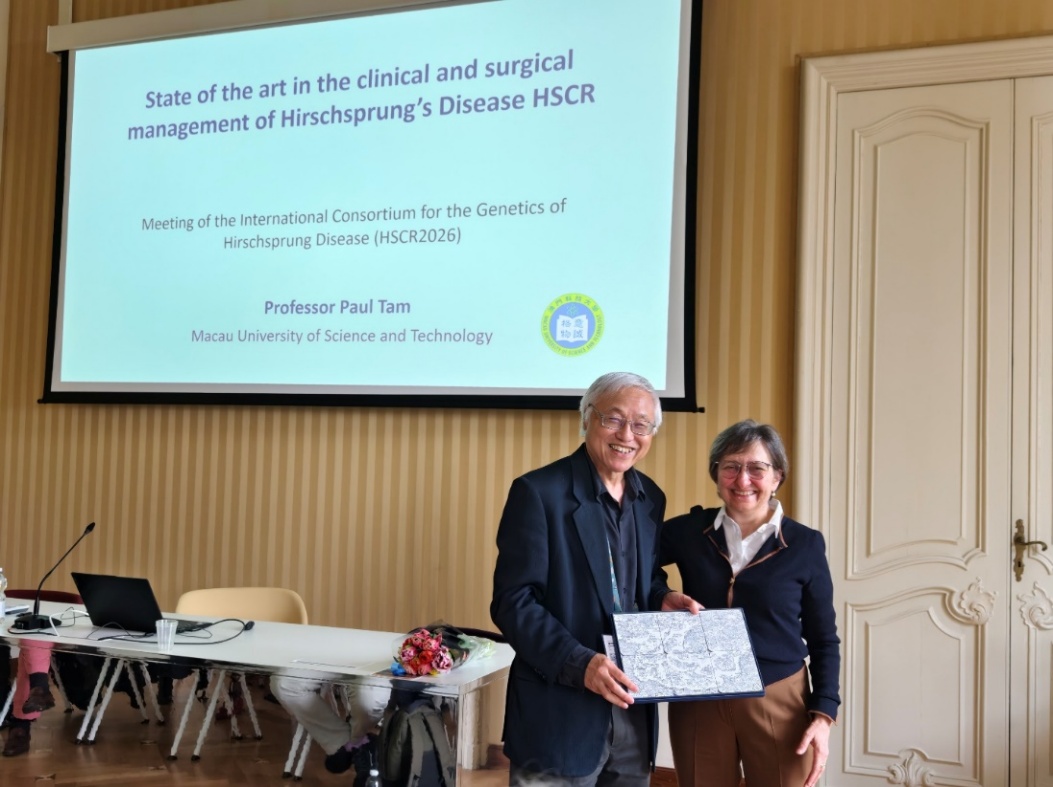 Vice President Paul Tam delivered a keynote lecture and presented a commemorative gift from Macau University of Science and Technology to the conference chair.
At the conference, Assistant Professor Bo Li from the Precision Regenerative Medicine Research Centre delivered an academic presentation entitled “HAEC and stromal-epithelial regenerative cross-talk.” Drawing on the team’s research foundation in the intestinal microenvironment, stromal remodeling, and regenerative repair, the presentation introduced new ideas regarding HSCR-associated enterocolitis and impaired tissue repair. Earlier, Assistant Professor Li also attended the ENS 2026 Leuven meeting in Belgium, where he engaged in extensive discussions with international colleagues on frontier topics including enteric nervous system development, Hirschsprung disease, the pathogenesis of HAEC, and regenerative medicine.
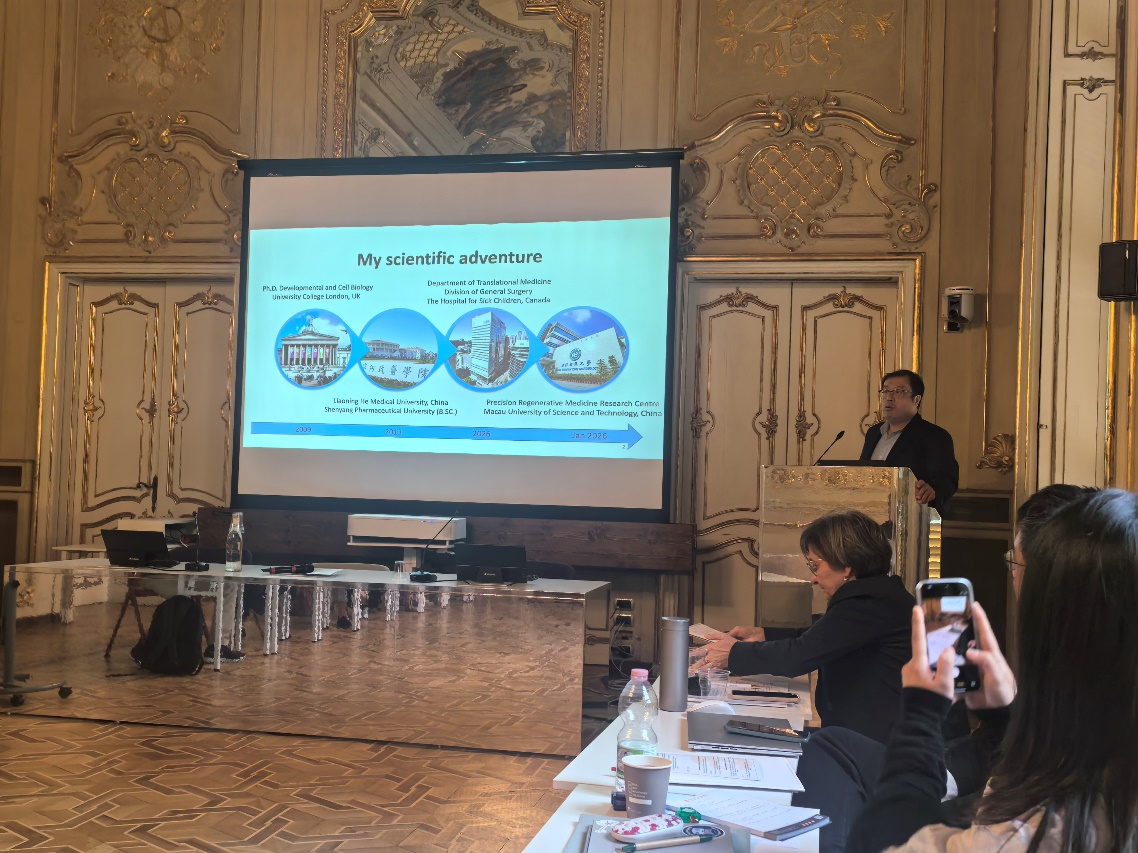 Assistant Professor Bo Li delivering his presentation at the conference.
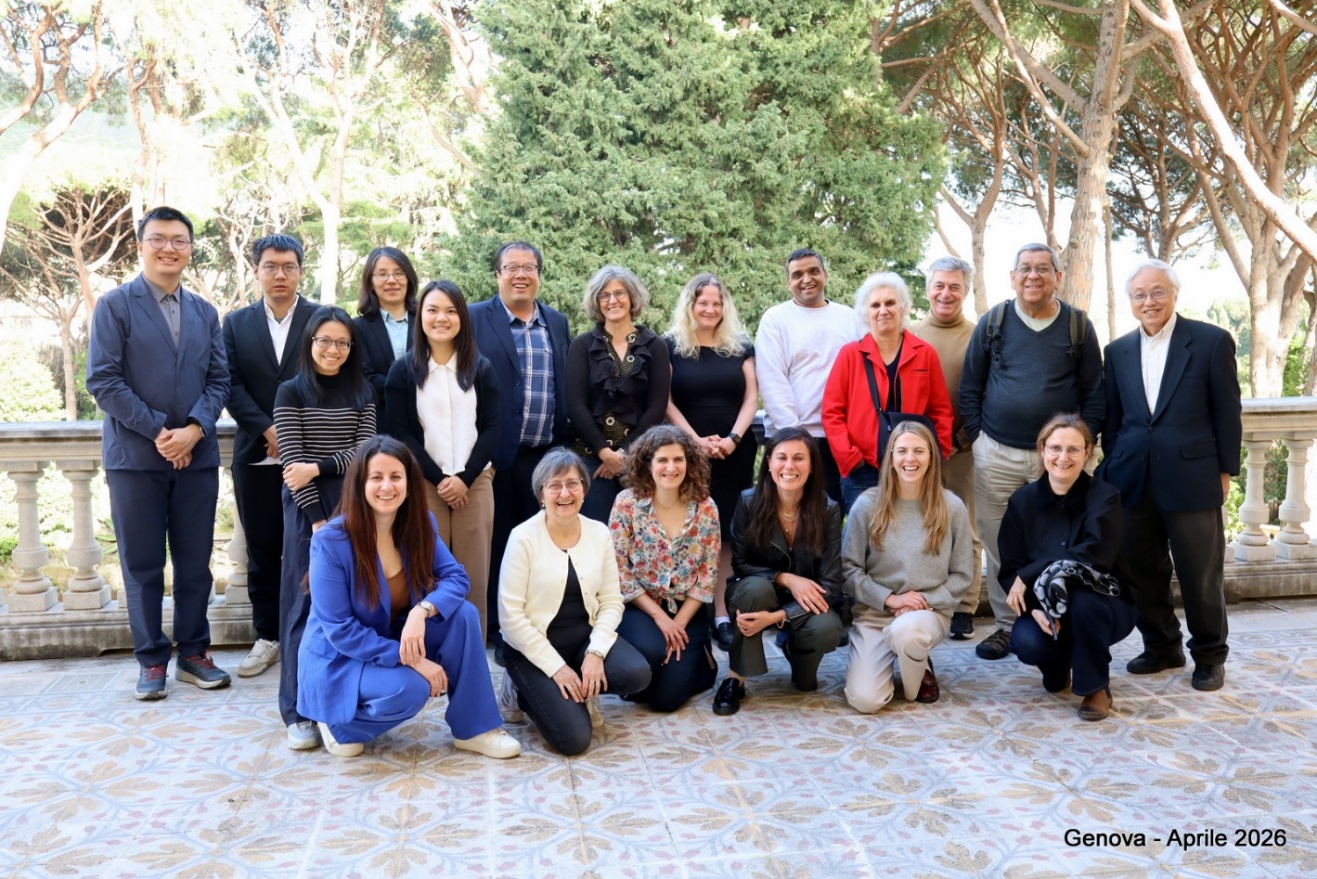 Group photo of conference participants.
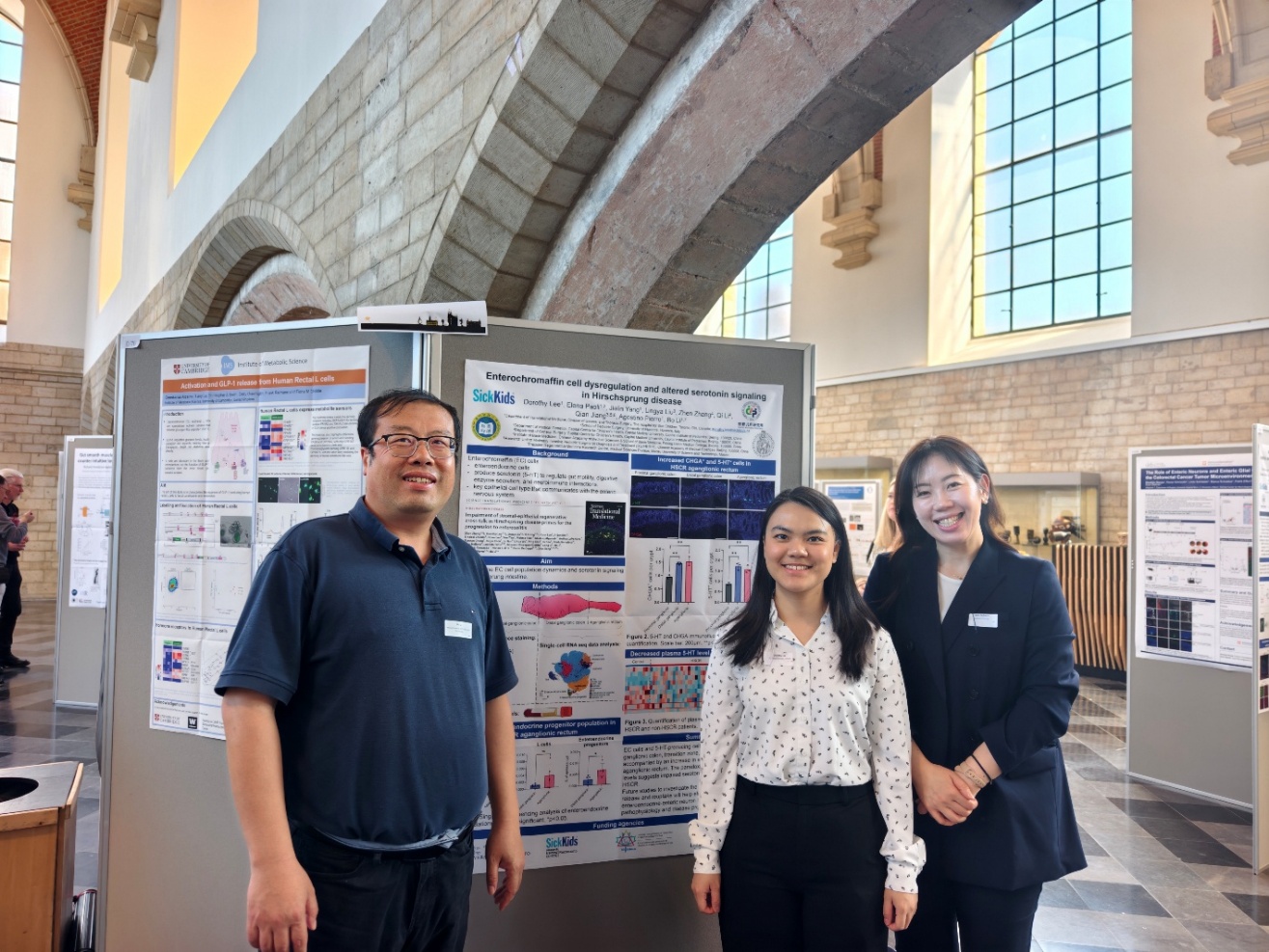 Assistant Professor Bo Li and team members during the ENS 2026 Leuven meeting.
This series of conference participations further enhanced the international visibility and engagement of the Precision Regenerative Medicine Research Centre under the Faculty of Medicine at MUST in the fields of intestinal development and regenerative medicine. It also strengthened collaborative ties with international peers in HSCR genetics, disease mechanisms, and translational research, laying a solid foundation for further integrating related research at MUST into the global academic network and increasing its academic influence.

