



Recently, Assistant Professor Bo Li from the Precision Regenerative Medicine Research Centre at the Macau University of Science and Technology (MUST) was invited by Shengjing Hospital of China Medical University to attend an academic event in Shenyang related to the development planning of paediatrics in Liaoning Province. He also delivered a thematic presentation and joined clinical and research experts from across the province in discussions on paediatric discipline development, scientific innovation, talent cultivation, and clinical translation.
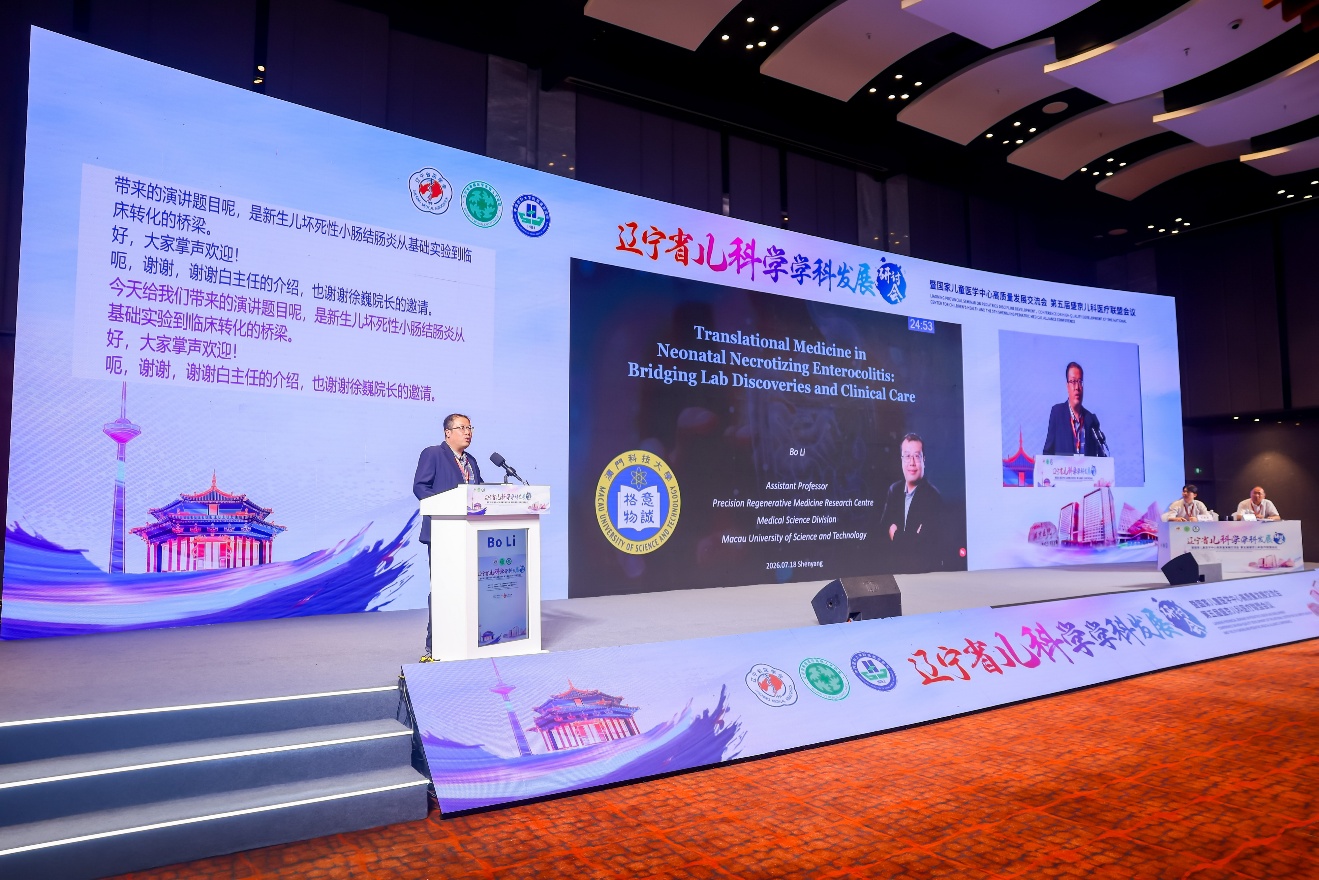
Assistant Professor Bo Li delivering a thematic presentation at the meeting
The meeting was organised in response to the healthcare and academic development needs of paediatrics in Liaoning Province. Discussions focused on strengthening leading paediatric specialties, improving the diagnosis and treatment of major childhood diseases, integrating clinical resources, cultivating medical talent, and promoting interdisciplinary collaboration. The event aimed to further consolidate paediatric clinical and research expertise across the province and enhance the coordinated development of clinical care, education, and research.
During the meeting, Assistant Professor Li presented his research in neonatal and paediatric intestinal diseases, intestinal stem cells, organoids, and regenerative medicine. He introduced the research team’s broader efforts to use stem cell and organoid technologies to investigate intestinal injury and repair, tissue microenvironment regulation, and regenerative therapeutic strategies. From the perspective of integrating fundamental research with clinical needs, the presentation also explored the potential application of regenerative medicine technologies in severe neonatal and paediatric gastrointestinal diseases.
During the event, Assistant Professor Li held in-depth discussions with experts from the paediatrics and paediatric surgery teams at Shengjing Hospital of China Medical University. The discussions covered neonatal intestinal diseases, congenital gastrointestinal disorders, fetal and paediatric disease research, postoperative tissue repair, and life-course health management. The two sides also explored potential models of collaboration involving clinical sample resources, training of young researchers, student exchanges, and joint research projects.
Shengjing Hospital of China Medical University has a strong clinical and research foundation in paediatrics and paediatric surgery, together with extensive resources in the diagnosis and treatment of childhood diseases. The Precision Regenerative Medicine Research Centre at MUST continues to advance the integration of stem cells, organoids, tissue engineering, and disease modelling. The two institutions therefore have complementary strengths in the mechanistic study of major paediatric diseases and the development of regenerative therapeutic strategies.
The exchange strengthened academic links between MUST and Shengjing Hospital of China Medical University and created new opportunities for MUST to participate in regional paediatric discipline development and expand high-level clinical research collaboration in mainland China. By combining MUST’s internationally connected research platforms with Liaoning Province’s extensive paediatric clinical resources, the two sides may further promote multidisciplinary, multicentre, and cross-regional collaboration, while accelerating the translation of research findings into improved diagnosis and treatment for childhood diseases.
Moving forward, the MUST research team will continue to address the clinical needs associated with major neonatal and paediatric diseases, strengthen collaboration with leading children’s medical centres and clinical specialties in mainland China, and promote deeper integration of fundamental research, clinical resources, talent development, and translational innovation, contributing to the high-quality development of paediatrics and the advancement of child health.

